Categories
Uncategorized

Signs of the Pandemic

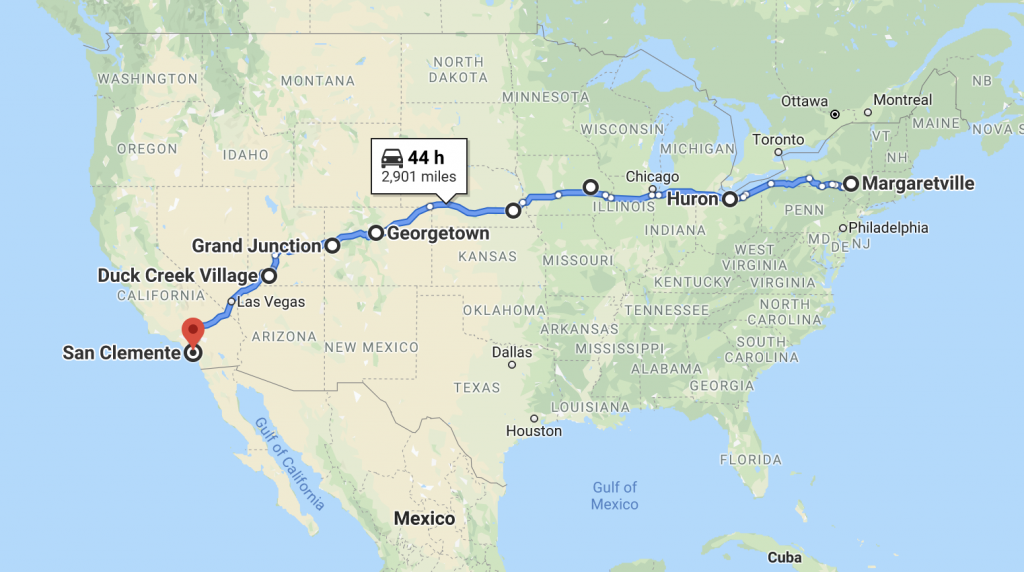
A year ago today we arrived in San Clemente after driving across the country from New York.

We left the city in early March of 2020 for what was initially a 2-week Airbnb in the Catskills. We had already outgrown our apartment (see my Bathroom Diaries Highlight on Instagram) but more than that, our apartment lacked gas since November 2019. A gas leak in the building left us without heat, hot water, a working stove or oven for what ended up being a full year. Not an ideal spot at which to “shelter in place.”

We extended our Catskills stay to a month, then to a second month, then decided to drive west. My parents have a small beach house in SoCal where we could stay for a while.

We packed our car with our same two weeks of clothing plus a week’s worth of food and made the trip cross-country. It was the height of uncertainty during the pandemic so we hit as few touch points as possible during the drive. National parks and campsites were closed so it was remote Airbnb’s that we cleaned thoroughly upon arrival plus picnics on the side of the road. I think we made the trip in records time for having a 17-month-old and large dog in tow.

I’d long dreamed of a road trip to return to California, though this was definitely not as I’d imagined it. But it was certainly memorable! I Here’s a view from the passenger seat window. 

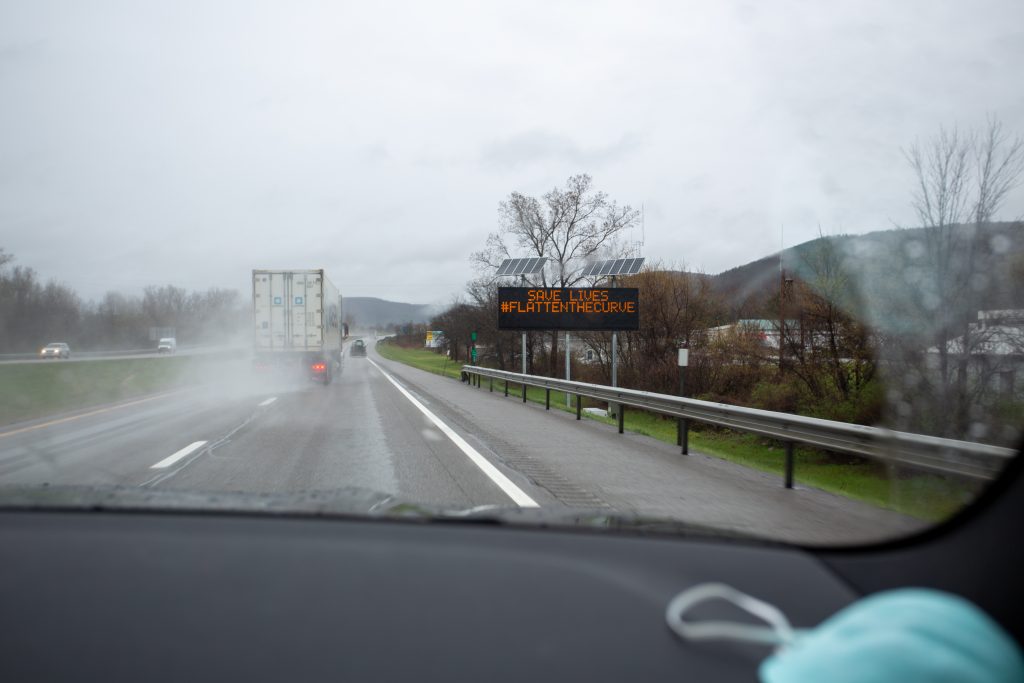
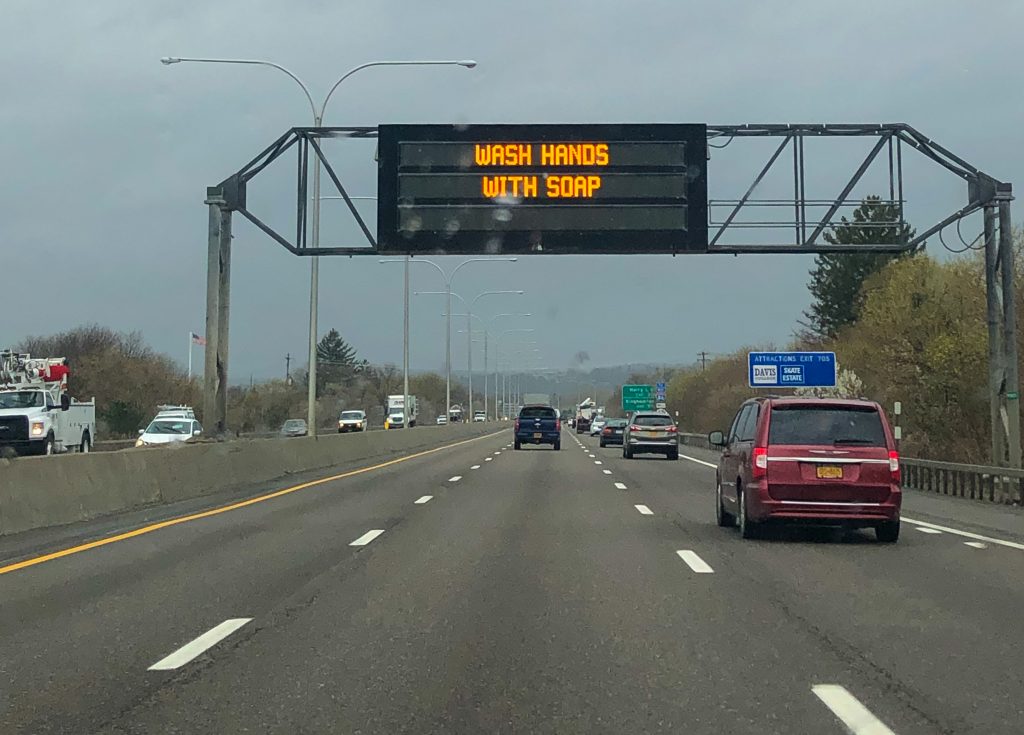
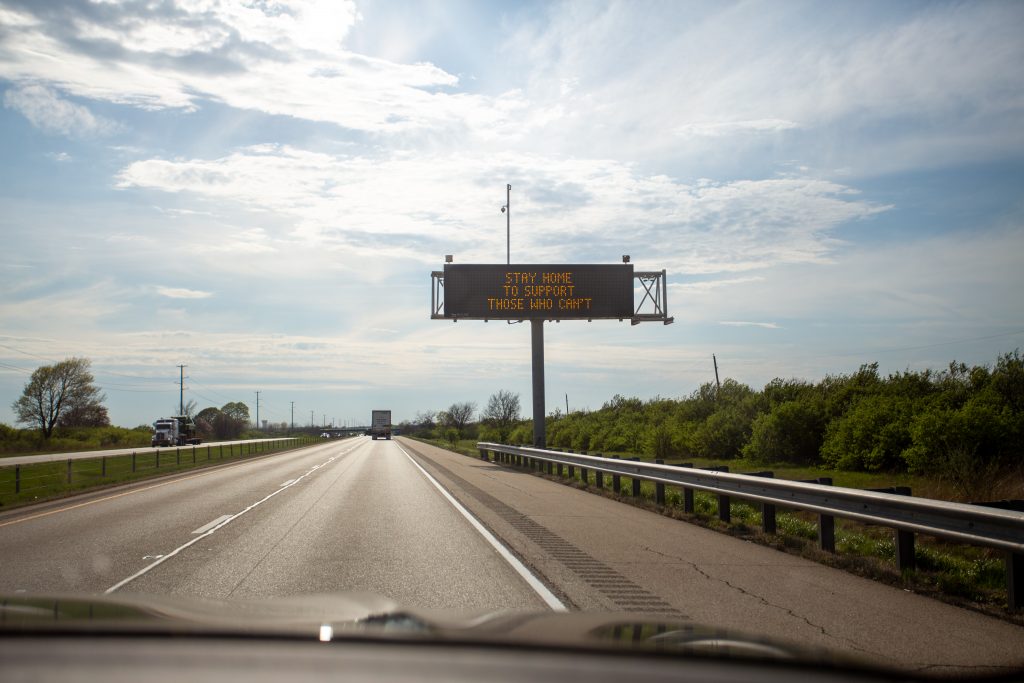
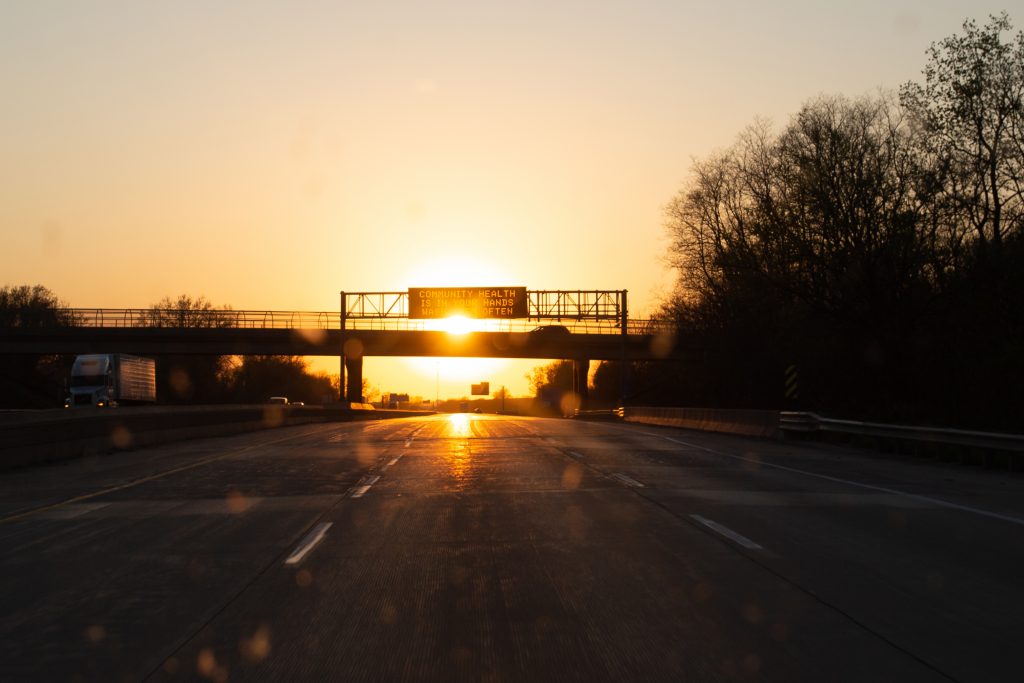
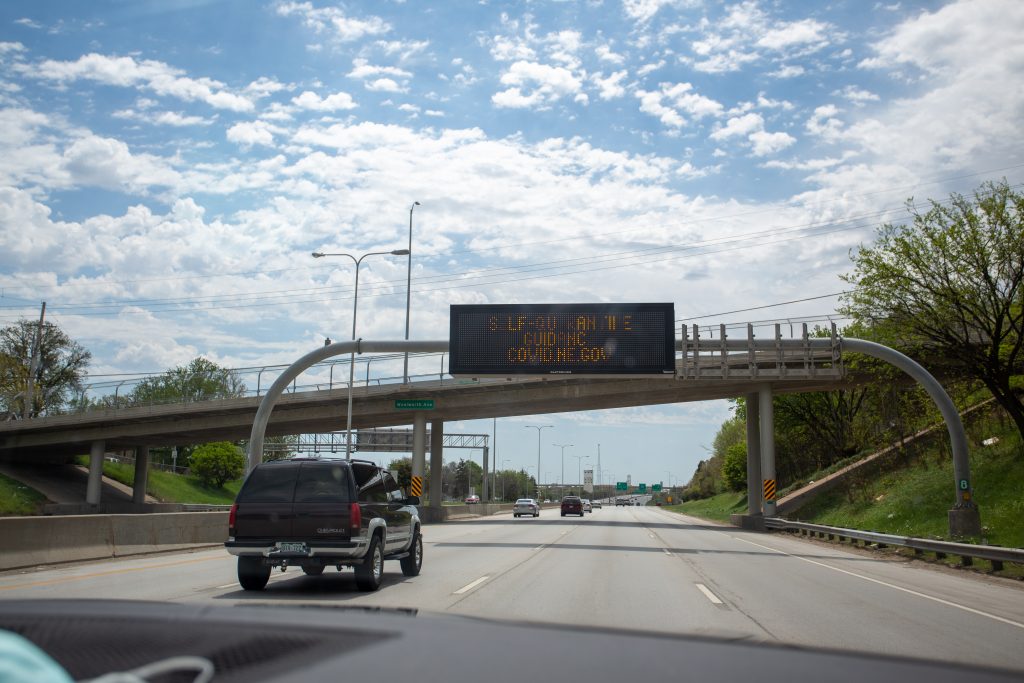
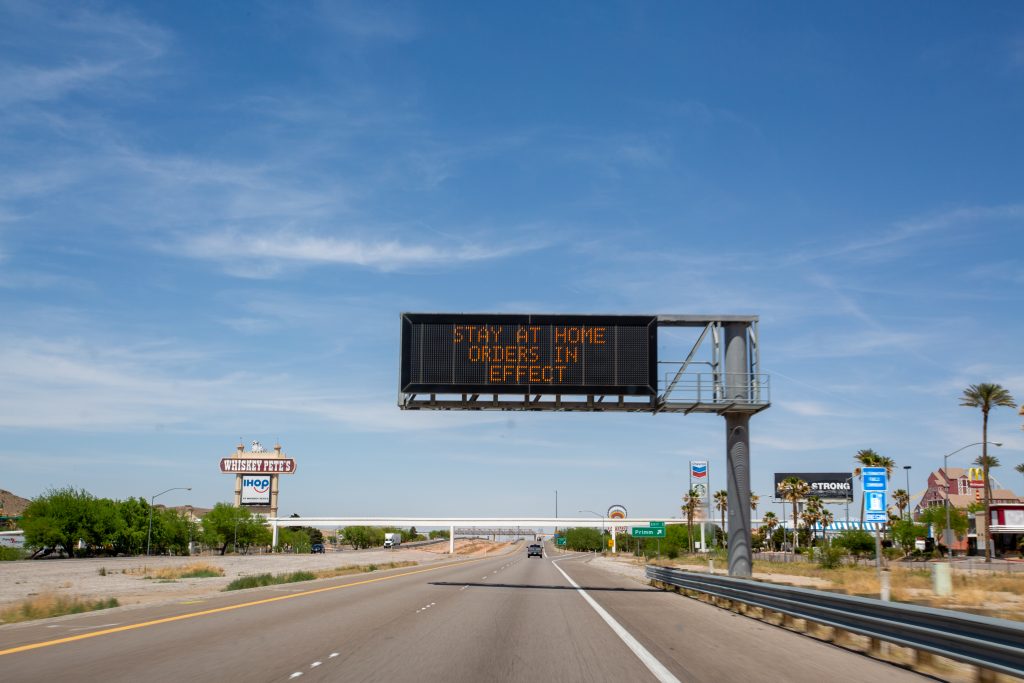
I was immediately struck by the digital road signs. Every state had their own pandemic messaging. It made the eerie drive on empty roads feel that much more surreal. I kept my camera in my lap the whole trip, ready to capture them all.

New York
New York
Ohio. Next sign: isolate for 14 days.
Indiana
Illinois
Iowa. Lots of signs, both digital and handmade, thanking truckers.
Iowa
Iowa. After a sleepless night in a terrible AirBnB I was not amused.
Nebraska
Colorado
Nevada
California
Categories
Uncategorized

2021 Monthly Photo Projects

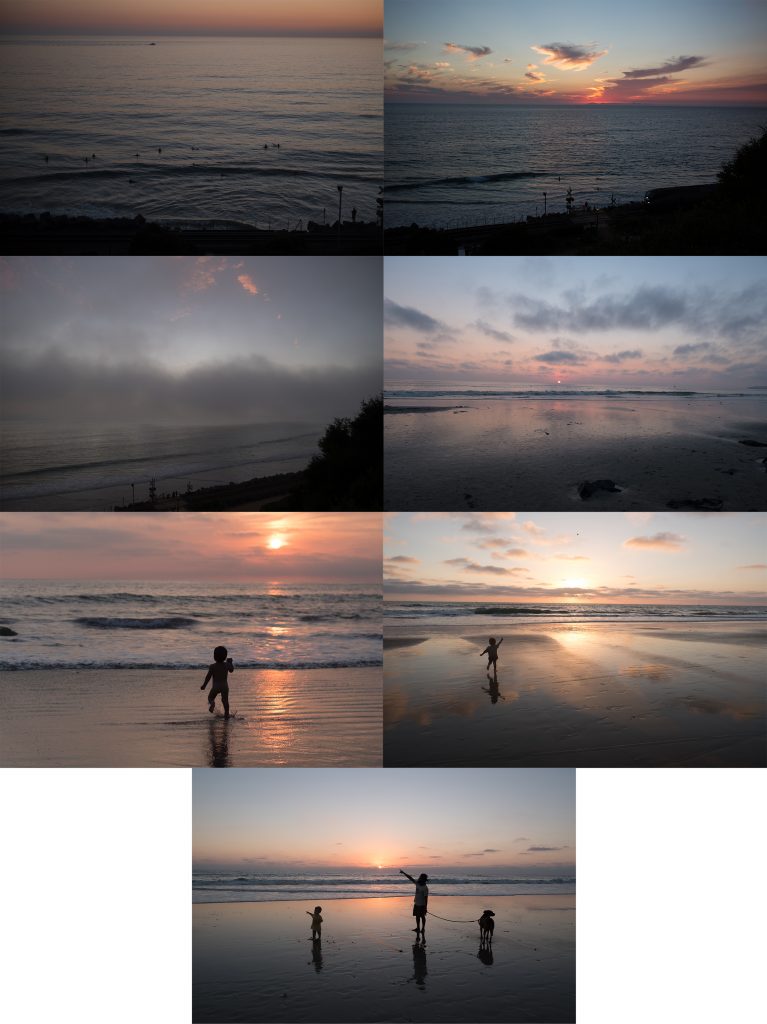
Sometime last October, I gave myself the task of photographing the sunset every night for a week. 

I was in a funk. The transition from working nonstop on MilkMade for the past ten years to becoming a stay at home mom during the pandemic was difficult for me. I found myself feeling unproductive and itching to work – work on my ice cream book, start a new project, or at least do something useful, or creative, or that continues my lifelong goal of self improvement.

So I turned to photography, something I had long enjoyed but simply dabbled in, mostly in the context of ice cream for the past 10 years. I started taking my camera out with me every day. I found photography was still something I could do for myself while chasing my 2 year old son around. I’ve shot the sunset every night since. 

For 2021, I decided that instead of just sunsets all the time, I’d give myself a new photo project each month. Something to shoot every day. It’s a small creative outlet that’s easy to do while on adventures with my son. It will also provide some structure to our days, something I’ve been lacking during the pandemic. And further, it will push me to improve in various genres of photography. 

I wrote out a list of twelve projects:

  1. The Surfliner train. We live right along a train track and see the Surfliner train every day. It’s Crosby’s favorite thing. “What do you want to do today, Crosby?” “Choo Choo.” I can try different styles of capturing a fast moving object.
  2. The pier. Photos of, on, under the pier.
  3. Me surfing every day. I feel regret every day that I don’t surf. I’d like to see how I feel if I surf every day for a month. Now I have a waterproof film camera and a GoPro to capture being out on the water.
  4. Flowers of San Clemente. When we moved here last May what I noticed most were the tropical flowers we saw on every walk. I want to photograph them this year, practicing my macro photography and also learning the names of them all.  
  5. Ole Hanson houses. There are around 200 remaining historic Spanish style houses in San Clemente that are nearly 100 years old (including the one we live in that my parents own). Nowhere are they all chronicled in a digestible manner so maybe I’ll do that.  
  6. The moon every night. Crosby loves the moon so I want to learn more about its phases so I can teach him.
  7. Surfers every day. I want to invest in a longer lens and capture all my neighbors, my brother, and even myself in the water.
  8. The street art around San Clemente. There are so many very cool beach-themed murals all over town. I want to see them all.
  9. Different beaches in SoCal. Time to explore the rest of the coast.
  10. Sunrises
  11. People of San Clemente. I am always afraid to photograph strangers so this will push me to get out of my comfort zone.
  12. The tide / waves. I plan my day around the tides, but want to learn more about them.
Categories
Uncategorized

Stay Home and Make Ice Cream

I’ve had various drafts of this post in the works for months. I delayed publishing and emailing it because the message kept changing. The story of what’s next for me, what’s next for MilkMade has changed almost monthly since we closed last November. And now… I mean, does it even matter?  

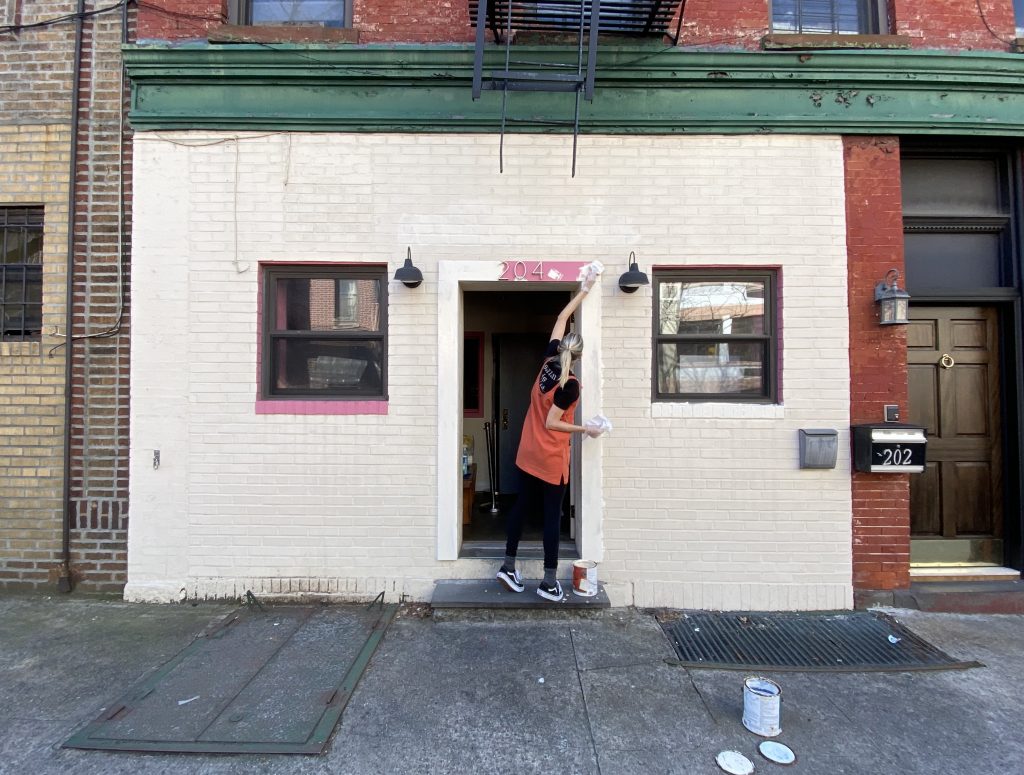
Initially, in December, I wanted to tell you that I missed you, but that I was excited to pass on the torch to another ice cream business who would be taking over my lease and picking up where we left off, serving you their ice cream at the picture perfect little shop at 204 Sackett this summer.

Then in February, that fell through in a very strange way. So I wanted to let you know that I tried! But the ice cream legacy will not live on at 204 Sackett. I painted over the pink trim as my symbolic farewell to Carroll Gardens.

Today those drafts are moot; the details and sentiments are obsolete in the current state of our city, our world. I’ll share them at a later time, perhaps as part of a recipe book memoir I’ve been thinking about penning. But for now I’m writing to say: Stay Home and Make Ice Cream. 

Though I’m especially glad that I chose to close MilkMade when I did, I really regret that we can’t deliver our ice cream to you during this time of isolation. I also wish there was a way we could be there to greet you when this is over and we all come out of hibernation. Gosh, the image of that feels like some sort of utopian dream right now.

In MilkMade’s absence, I’d like to encourage those who can to try to make ice cream at home. Everyone’s talking about their sourdough starter, but ice cream is just as magical. More so, if you ask me. It’s a really gratifying activity, and if you have kids, it’s a fun experiment (and great pastime!). If you have an ice cream machine, great. If you don’t, that’s okay, I’ll show you how to make it without one. Stay tuned for more but for now, here is my first quarantine ice cream recipe, Basil Chip.

It’s hosted on our Instagram @milkmade and our old Tumblr, Adventures in Ice Cream, where I’ll be posting new recipes each week.

I’d also like to let you know that I’m starting a newsletter / mailing list. I’ve been wanting to do so for a while and figure now is an okay time for me to start. It’ll be a hybrid of MilkMade’s old newsletter, plus a revival of my blog from pre-MM days, What I Learned Today. I’ll share one of MM’s recipes each week, but will also expand beyond ice cream to other projects I’m working on or things I find interesting. Here is the link to subscribe. Thank you for subscribing! Be safe, be well.

Categories
Uncategorized

What I Learned at Ice Cream School

After ten years in the ice cream business, I finally went to ice cream school. What’s even more ironic is I closed my business just months before the course! 

I’d always known about Penn State’s Ice Cream Short Course, the school for ice cream manufacturers. In it’s 128th year, it is an intensive week long course, the equivalent of a 15-week 3-credit course, that educates professionals on all aspects of the ice cream industry. It is held in January, the slowest month for business, on the Penn State Campus, with the famous Berkey Creamery serving as a laboratory for research. 

Though I owned an ice cream business for ten years, I had never wanted to attend the course before. I regarded it as something geared for large scale manufacturers from whom, and I quote the professor in his opening lecture, “Does it even matter if it’s real ice cream?” Not a course for a purist like me. But at some point in the last couple of years, I decided I should go. Perhaps it had become a bit more applicable for entrepreneurs given the growth in “craft” manufacturers like MilkMade over the years, I thought. But honestly mostly it was to boost my resume. I’d seen some newcomers to the ice cream scene be lauded for “graduating from ice cream school” and, though I knew my ten years of experience to be a far greater education, I wanted to be on level ground. From an outsider’s perspective, at least. 

So I enrolled sometime last Spring of 2019 (note that spots in the course sell out very quickly every year, I actually attempted to enroll for last year but was too late), paid my tidy tuition fee, and planned to attend January 2020. Sometime in between, however, I closed MilkMade, seeking a change of pace after ten years in business. Even so, I figured that I’d paid all that money and waited all these years, I should still attend and see what comes of it. 

I gotta tell you that I was like some sort of celebrity at this thing. Well, for the half of the class that were entrepreneurs or wanna-be-entrepreneurs. The other half, from big industry, couldn’t give a lick about me. But I had people hailing from all over the country (and world) asking about MilkMade, why I’d closed, what’s next.I kid you not one woman came up to hug me, said she was honored to be in my presence and thanked me for what I’d done for the industry and women entrepreneurs. I had no idea!

During one break someone asked, “So at this point you’re either regretting that you took this course, or you’re regretting that you closed your business.” Neither! I was (and still am) happy with my decision to close MilkMade, AND I was happy to have attended the course. 

Here’s what I learned: 

In the first day, everyone is asked to introduce themselves and tell the group what is their “ice cream dream.” Again, half of the class came from big business: Unilever, Froneri, Kemps, and the like. Their dreams were mostly around quality control or perhaps finally getting one of their ideas to market. The other half were small businesses or people who wanted to start small businesses. Of course, the dream of all of those entrepreneurs was to become one of the big guys, a large global brand. And then there were a select few from my favorite group, family run dairy farms. Huge admiration.

Once niceties were out of the way, we dove right into learning a scientific foundation for ice cream. In his opening remarks, the professor noted that ice cream is easy to make. When it works, at least, it’s easy. But when it doesn’t work, you need to know the science. I agree, but would add that if you innovate, which is what MilkMade was known for, you also need to know the science. 

When I started MilkMade, I taught myself a basic understanding of the chemistry of ice cream, enough that I could create recipes from scratch and iterate on them until they tasted just right. Famously, it took me ten tries to develop my Red Velvet Cake cheesecake ice cream base when I first started out. But more than just testing the ratios of fat to milk solids to sugars, this course provided a much more in depth venture into, say, how the fat molecules in an ice cream mix get protected by a protein, which allows it to partially coalesce during the ageing process in order to trap air more easily during the freezing process. Fascinating, really. 

The lectures were 1-1.5 hours and covered everything  – the composition of milk, different types of sweeteners and stabilizers, food microbiology and pathogen control, current regulatory guidelines, how to market, how to calculate an ice cream recipe, and of course, how exactly to make ice cream. 

The majority of the course is in lecture form, with a few hours each day dedicated to the lab at the Berkey Creamery. In lab, we had a tour of the creamery, a demonstration of different types of batch freezers (code for small ice cream machines), and a taste-test of all different types of vanilla extracts. In my favorite lab, we explored the differences that different variables of ice cream – overrun, milkfat and milk solids content, and stabilizers – have on the final product. These differences were stark and really eye opening for me, though require a lengthier description in perhaps a later post. Needless to say, my preferred ice cream profile was low overrun (that’s the amount of air whipped in during the freezing process), high milkfat (that’s exactly what it sounds like), and no stabilizer (a gum, syrup, or starch meant to reduce ice crystal growth).

I wasn’t much for networking during the course (my breaks and meal-times were spent pumping breastmilk for my 1 year old at home), but I did glean some interesting secrets from others in the industry. In a side conversation with a fellow from one of the big manufacturers I was asked, “What do you do with mistakes?” 

“Throw them away,” I said. “What do you do?” 

“Turn it into chocolate.” He went on to tell me how they turn all their seconds into chocolate. For example, if a container of Neapolitan turned out with unequal amounts of strawberry, vanilla, and chocolate ice creams, they’d melt the whole thing down, add in some other flavorings and turn it all into chocolate. 

“See, you’re why I started my business in the first place,” I told him. 

A few other anecdotes from the course reminded me just why I had started MilkMade. The discussion of flavorings, assuming “jug” flavorings were the common way to create ice cream flavors. That means using a jug of strawberry flavored syrup instead of real strawberries.

A question from the audience about the use of eggs instead of gums or syrups as a stabilizer. It was pretty much dismissed by the lecturer. (MilkMade used eggs in most ice cream bases.)

One lecturer discussed how common it is that the trucks transporting ice cream across the country turn off the cooling system once they leave the warehouse and turn it back on before getting to their destination checkpoint. This is done to save money on refrigeration of course, causing the ice cream inside to melt and refreeze unnoticed at the checkpoints. To avoid this, companies use alarms on their pallets to signal the rise above a certain temperature. They also inject a cocktail of stabilizers to ensure a “shelf stable” product despite temperature fluctuations involved in distribution.

This all made me think that ice cream isn’t meant for national distribution. It’s not meant to be transported on a truck cross country to then sit on a loading dock waiting to be stocked. It’s not meant to sit on a supermarket shelf for a year. And it shouldn’t need a cocktail of gums to survive. I’ve always believed in this; it’s why I got started making ice cream in the first place and it is how we operated at MilkMade. (Note that we did test out our own shipping direct-to-consumer, and because we didn’t change our manufacturing process to do so, the operations proved to be too costly so we re-focused on local delivery instead). 

Anecdotally, there used to be an ice cream store in every town. Over time, manufacturing consolidated, price wars were waged, and the quality of the product deteriorated. Of course, over time there have been renaissances of novel premiums products. Breyers in the late 1800s. Dryer’s/Edy’s in the 1920s. Haagen Dazs in 1960s. Ben and Jerry’s in the late 70s. Milkmade in 2009 (hehe). But, like the “ice cream dreams”  of all of the entrepreneurs in my class (which, by the way, is the same dream that I used to harbor for MilkMade), they became big, global brands. And with that, the quality of their ice cream deteriorated. 

At some point in the past ten years since starting MilkMade, I realized that my desire to build a big business and my commitment to the unique quality of my product could never align. So we doubled down on the latter, dialing up what made MilkMade so unique – quality ingredients sourced locally, small batch production, and a rotating menu of creative flavors. 

Though for all the trolling I’ve done to large scale manufacturers, I will say that after attending the course I have a new found admiration for the science (and obviously operations) that goes into the production of large scale commercial ice cream. It’s remarkable.

Long story short – I’ve been asked if I would recommend the Penn State Ice Cream Short Course to aspiring entrepreneurs. I most definitely would.
Categories
Uncategorized

Opposite Year

It’s the Chinese New Year and I take it seriously. I join in the annual Chinatown parade (although this year I avoided the crowd), I adorn my apartment with red lanterns and hang the little animal trinkets for good luck. I’ve even been known to buy a dead fish just to carry it over to the new year. Ever since my Bad Year for Boars, I’ve given great credence to the traditions and horoscopes of the Chinese New Year. Though they can be found easily online, I get my horoscopes from my friend Alex’s mom (notably, she is the one who warned us that 2013 would be a bad year for boars). 

Here’s what she says for the year of the rat, 2020: 

My mom said for 2020 Boars you need to have opposite thinking. Flip it around. What everyone or you normally would do, do the opposite this year.

Opposite year, I said. Like George Costanza

Oddly enough, I’ve already started 2020 differently from how I’ve started any year in recent memory: I’d set only three goals. 

Of course I have a hashtag to help guide my year (#takethepowerback), and Alex and I, along with our friends and spouses, did our annual “Burn”. Every New Year’s Eve, we reflect upon and commemorate the past year by writing a list of all the bad things that happened in that year. And then we burn it. We also write a list of all the good things we hope to happen in the coming year and burn that too. Sometimes these are simple wishes, sometimes they are resolutions, but for me, most often they are like a business plan for life, outlined with bullet points separated into every facet from work to health, family, social life, education, and pursuits of fun and adventure. 

My goals are always lofty. I’m reminded of, “Run every day” or “Six pack abs” (lol). “Hit x revenue.” “Journal every night.” “Read the full NYT every day.” “Surf every weekend.” All this along with single-handedly running a small business, and then becoming a mom.

I have realized that the way I work is to try to overachieve, to set my goals extremely high. And though I fall short of reaching them, at least I’ll land pretty high. I’d argue that I’ve landed higher than if I had set my goals realistically. Yet this strategy has always left me disappointed in myself. 

This year I needed a change. I didn’t want to have the nagging feeling of disappointment, of chasing the next and the next thing. I know that is a blessed trait of the entrepreneur, but after reflecting on ten years of building MilkMade, I have just one regret: I wish I enjoyed the journey more. 

Initially I did write my lists for 2020: I started outlining an ice cream book, I put limits on my take-out and plastic consumption, I vowed to write more, to read a book a week, to revisit photography.

Then my husband suggested that I don’t do anything. Perhaps I should take some time to reset after ten years of back-breaking work, spend time with our son, and just enjoy New York for the first time in a long time. 

I realized that is exactly the way to take the power back.  So I abandoned my lofty business plan and for 2020 set just three goals: teach Crosby how to swim, finally read The Power Broker, and learn how to make the perfect rugbrød.

Happy New Year!